
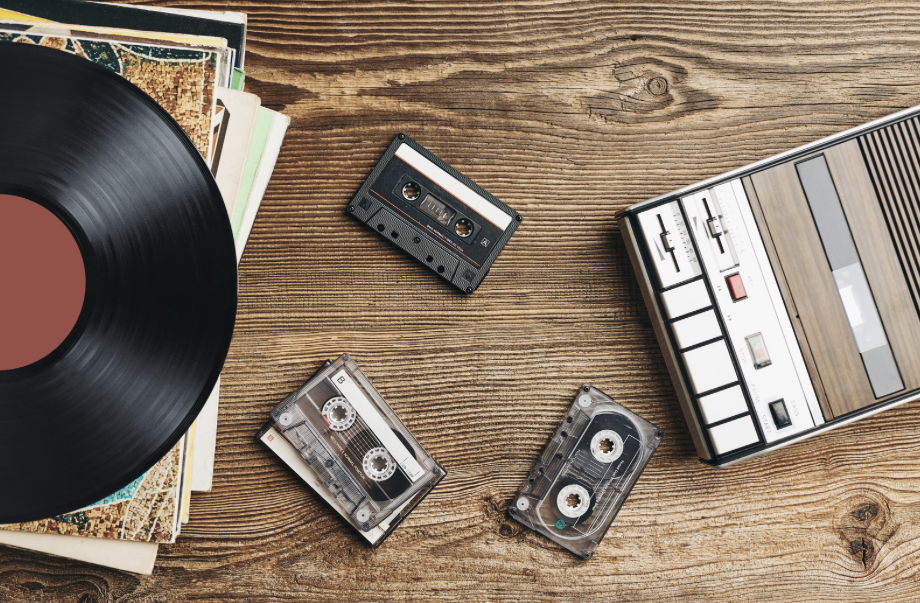
The other day, I was in my car, halfway through a grocery run, when a song I hadn’t heard in years came on. No warning, no build-up. One moment I was thinking about avocados, the next I was back in a different decade, in a different version of myself, with the same lump in my throat.
That’s the strange magic of songs that stay with us for life. It’s not always the biggest hit, or the “best” song on paper. Some songs attach themselves to our lives in ways we never chose. They become less like entertainment and more like a private hallway, and one chorus can open every door at once.
This isn’t about charts or playlists. It’s about memory, emotion, and meaning, and why music can hold them all at the same time.
Music as a Time Capsule (Why a Song Can Send You Back Instantly)
A song doesn’t just sit in your brain like a fact. It gets stored like a scene.
Music has built-in memory hooks: a beat that repeats, a melody that loops, a line you can’t forget. That repetition matters because our brains love patterns. Rhythm gives timing cues, melody gives shape, and lyrics add a story. Put them together and you get something your mind can grab onto, even years later.
The real glue, though, is emotion. A song heard during a high-feeling moment tends to stick harder than one playing in the background. Joy, fear, relief, longing, first-love nerves, those feelings don’t file neatly away. They stamp themselves in.
I also love how many parts of the brain music wakes up at once. You’re not only hearing it. You’re feeling it, predicting it, sometimes moving with it without meaning to. That “all-hands-on-deck” experience helps explain why hearing one old song can bring back a whole time period in seconds.
The First Time We Felt Something (How “Firsts” Brand a Song Into Us)
So many lifelong songs are tied to “firsts.”
First love. First heartbreak. First time you felt seen in a room. First time you drove alone at night, windows down, thinking, “I might actually be okay.” When something happens for the first time, it’s loud in the heart. Music becomes the soundtrack because it’s already speaking the language of feeling.
That’s one reason I’ve always been pulled toward jazz standards and classic pop. They don’t just fill space. They tell the truth, even when the truth is messy. A great standard can sound like a conversation you’re almost scared to have, except the song says it for you.
Growing up, one of my favorite musicians was Judy Garland. Not because she was perfect, but because she was real. There was warmth, bite, heartbreak, humor, all in one phrase. When someone sings like that, you don’t just hear a song, you learn what it feels like to be human. Those are the songs you carry.
Why We Keep Coming Back (Familiar Songs as Comfort)
New music can be exciting. It can wake you up. It can make you feel cool, or young, or curious.
But returning to an old song does something different. It’s comfort with a pulse.
A familiar song can feel safe because you already know where it’s going. You know the turn in the melody. You know the line that’s coming like a friend walking through the door. When life feels shaky, that kind of predictability is soothing.
There’s also a reward element in music. When a song hits just right, your brain can release dopamine, the “that felt good” signal. Over time, your mind learns, “This song gives me relief,” or “This song helps me cry,” or “This song makes the day lighter.” So you return, not out of habit, but out of need.
And yes, sometimes a tiny snippet loops in your head. Those “earworms” can be annoying, but they’re also a memory tool. A repeating line can keep the song active in your mind, and that keeps the feelings tied to it active too.
Songs Change as We Change (The Lyric Didn’t Move, You Did)
One of my favorite things about music is that the song stays the same, but I don’t.
I’ve had songs I thought were simple when I was younger, and now they hit like a letter someone wrote to me years ago, sealed until I was ready. The lyric didn’t get deeper. I got more life in me, which means I hear more in it.
A breakup song can feel dramatic at 19. At 39, it might sound like survival. A hopeful song can feel like romance one year, and like grief the next, because hope becomes a different thing after you’ve lost something.
That’s why certain songs stay with us for life. They’re flexible. They don’t force one meaning. They hold whatever we bring.
When I listen back to songs I’ve loved for decades, I sometimes notice I’m not chasing the old memory anymore. I’m checking in with who I am now. Music becomes a mirror, and it doesn’t lie, but it also doesn’t judge.
Performance, Listening, and Personal Connection (Why Singing It Feels Different)
Listening to a song is intimate. Singing a song is personal.
When I perform, I’m not just enjoying the tune. I’m responsible for the story in it. I have to decide what I believe in that lyric, and I have to stand behind it, right there in front of people who might need it.
That’s why performers often feel closest to songs that match lived experience. If I’ve felt the ache, I can’t fake it. If I’ve felt the joy, I don’t want to underplay it. Singing a song you’ve truly lived is like holding a photograph that still has heat.
That’s also the heart behind my album, Yesterday Once More. It was recorded live at Capitol Records Studios in Hollywood with my six-piece band, and I wanted it to feel like you’re right there in the room with us. If you want to hear the kind of songs I hold close, you can listen to Yesterday Once More. Those tracks aren’t just “performed,” they’re shared.
The Quiet Power of Nostalgia (Warmth, Not Escape)
People talk about nostalgia like it’s running backward. I don’t see it that way.
For me, nostalgia can be a form of steadiness. Life changes fast, and we change with it. An old song can be proof that you’ve made it through things before. It can remind you that you had joy once, which means you can have it again.
Nostalgia also has texture. You don’t only remember the good parts. You remember the whole scene: the room, the season, the person you were then. A song can hold that without turning it into a speech. It just plays, and somehow you understand.
I think that’s why music-evoked memories can feel so sharp. The song is the key, and your mind swings the door open on its own. Not to trap you in the past, but to connect you to your own timeline.
Conclusion
Back in that car, I let the song play all the way through. I didn’t skip it, and I didn’t rush the feeling. I just sat with it, grateful that music can keep a piece of us safe. We don’t outgrow the songs that matter, we grow alongside them, and their meaning keeps changing as we do. If a song has stayed with you for life, I’d love to know which one, and what it still says to you.